
Hillside lots and runoff
Homes set into a slope take groundwater against the uphill wall, which is often the first place staining shows.
Serving Decatur, Georgia & surrounding areas
Open 24/7
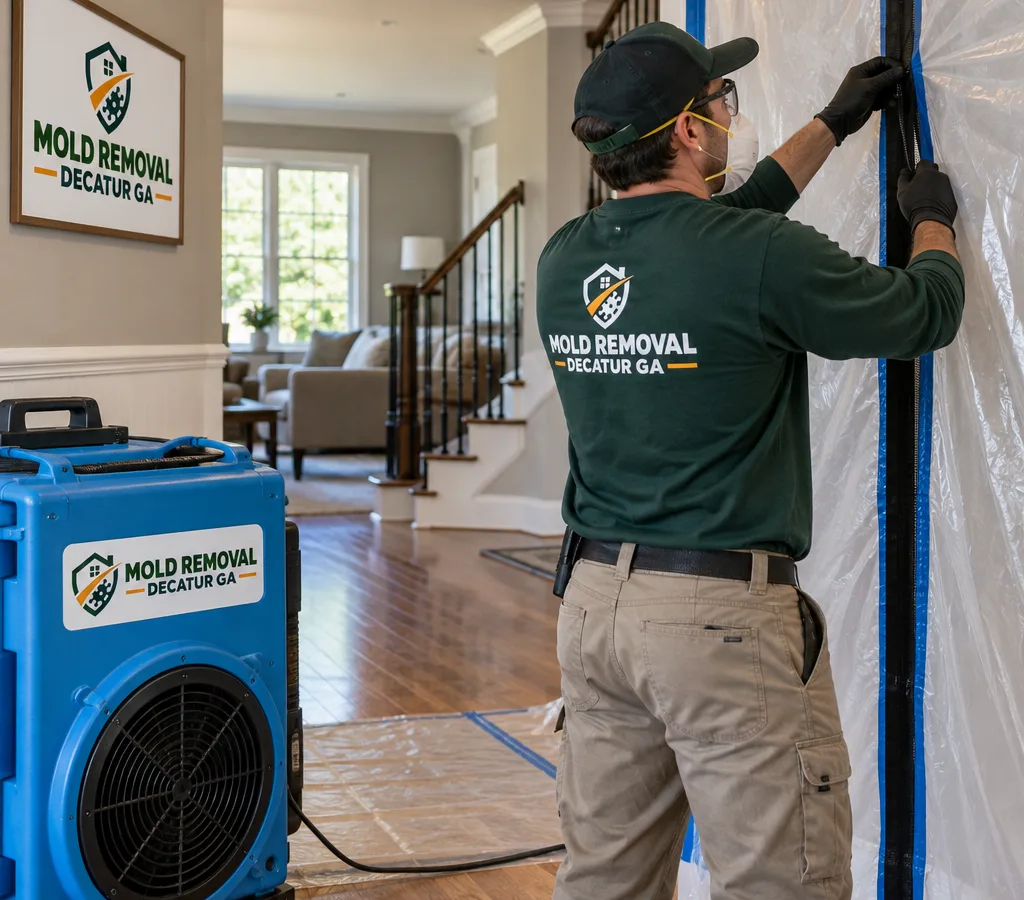
Basement mold in Decatur, Georgia
Mold on foundation walls, behind finished drywall and under carpet removed under containment, with the seepage or humidity source written down.
Answer first
Basement mold removal takes out moldy drywall, baseboard, carpet and pad in below-grade rooms, cleans block or poured foundation walls, and documents where the water came in. In a finished basement the hidden side of the wall is often worse than the visible stain, so the bottom of the drywall is usually opened to check the studs and the back of the board.
Basements on Decatur hillside lots take on water in two ways: liquid seepage through foundation walls after heavy rain, and summer humidity condensing on cool concrete. The first leaves tide lines and white mineral deposits. The second shows up as musty carpet, spotting on stored boxes and growth low on walls.
Below-grade work is planned around the foundation and drainage. When mold has spread beyond the basement into upper floors, the scope becomes mold cleanup across the whole home.
Scope of the work
Basement jobs focus on porous finishes and the concrete behind them:
Flood-cut of finished walls: Drywall is cut above the damage line (often 2 to 4 feet up) so studs and the back of the board can be checked and cleaned.
Carpet, pad and tack strip: Wet or moldy flooring layers are removed, since pad holds water against the slab.
Foundation wall cleaning: Block and poured walls are HEPA vacuumed and scrubbed to remove surface growth and debris.
Stored contents: Boxes, furniture and other items that touched wet surfaces are sorted into clean, cleanable and discard.
Humidity readings: Relative humidity and material moisture are logged so you know whether a dehumidifier is keeping up.
Interior waterproofing, drain tile and grading are separate trades. We note what we see so the right fix happens before walls are rebuilt.
Decatur basement conditions
Homes set into a slope take groundwater against the uphill wall, which is often the first place staining shows.
Older hollow-block walls let moisture wick through the cores and out the face of the block.
Drywall set directly against foundation walls, without a gap or barrier, traps moisture behind the board.
Clogged window wells and walkout thresholds let rainwater in during summer storms.
A unit that is too small, or one that drains into a full bucket, lets humidity climb above 60 percent.
Four steps
We look for tide lines, efflorescence, wet studs and humidity levels to see whether the problem is seepage, condensation or a leak.
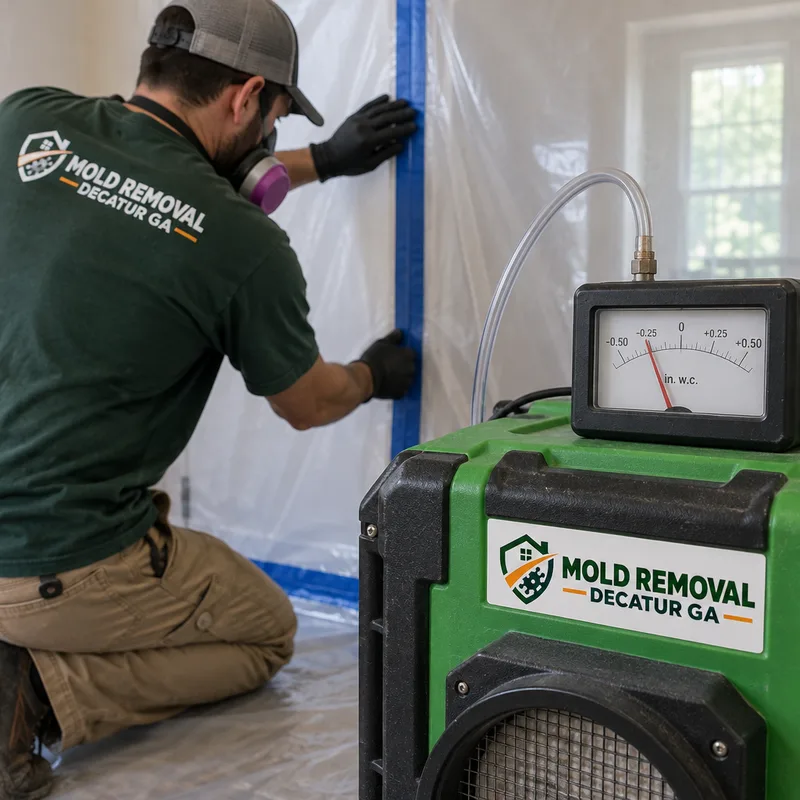
The stairwell or affected rooms are sealed off and run under negative air so dust stays downstairs.
Moldy drywall, carpet and pad come out, then studs and foundation walls are cleaned and treated.
The space is dried, readings are recorded, and you get a list of drainage or humidity fixes before rebuild.
Related services
Spread or recurring growth handled with negative air, HEPA detailing and a documented closeout.
Growth on joists and subfloor from damp clay and humid vents.
Moisture mapping and sampling when the source is hidden.
Dark growth on drywall after a long leak, removed under sealed containment.
Leaks, burst pipes and storm water dried before mold sets in.
Roof sheathing growth from poor venting and bath fan exhaust.
Coils, drain pans and ducts that smell musty when the AC runs.
Growth behind tile, under vanities and on ceilings that keeps returning.
Common questions
Musty odor usually means growth is hidden, most often under carpet pad, behind finished drywall, or on the back of paneling. It can also come from damp stored items. Moisture readings at the base of walls and under flooring help find it.
Concrete itself is not food for mold, but the dust, paint and organic film on its surface are. Growth on concrete is usually surface-level and can be cleaned once the wall is drying.
No. Drywall is removed where it is wet or moldy, usually with a cut a foot or more above the highest damage. Dry, clean board above that line can stay.
Keeping a basement between 30 and 50 percent relative humidity, and below 60 percent at most, makes mold growth unlikely. A hygrometer is an easy way to check.
Not on its own. Coatings can reduce some dampness, but they do not stop water pushing through from outside, and painting over growth hides it rather than removing it.
Tell us where the stains, smell or water marks are. We will trace the water path, contain the space and lay out what comes out and what can be cleaned.