
Behind a leaking toilet or tub
Slow leaks into the wall or ceiling below a bathroom keep drywall paper wet long enough for dark growth.
Serving Decatur, Georgia & surrounding areas
Open 24/7
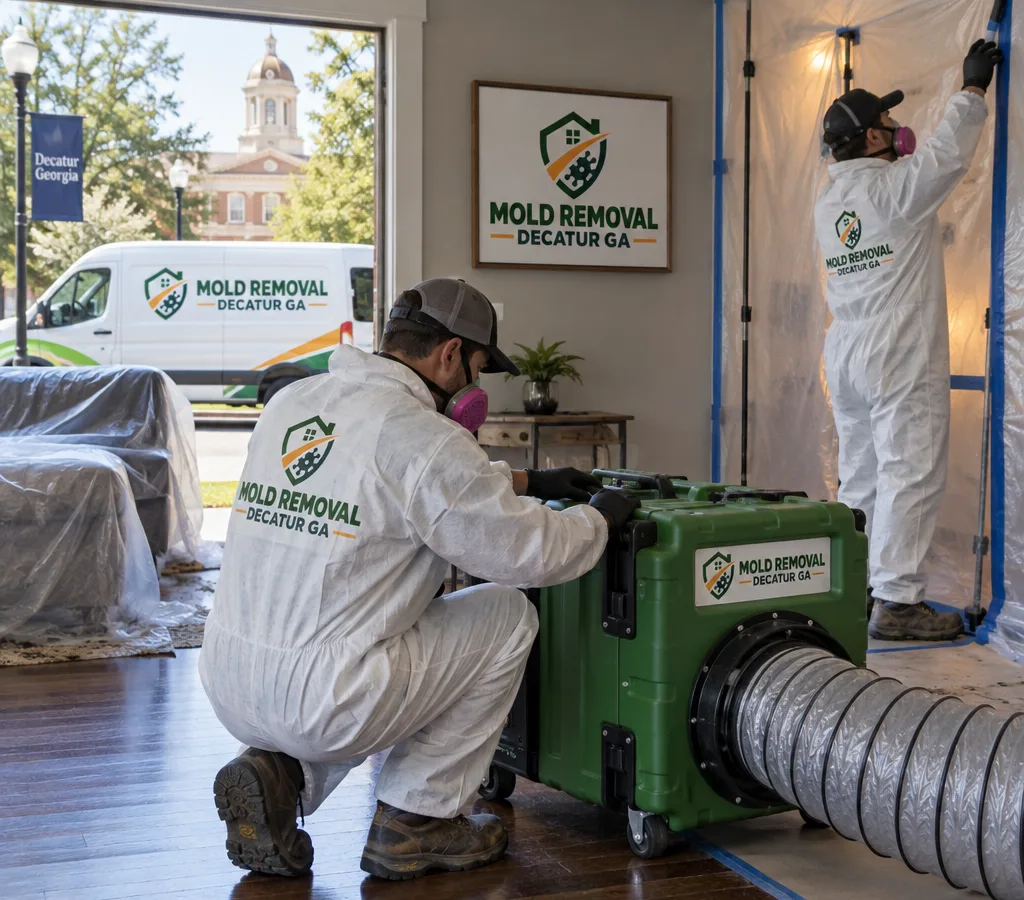
Black mold in Decatur, Georgia
Dark, slimy or sooty growth on drywall and wood taken out under sealed containment, along with the long-term moisture that grew it.
Answer first
Black mold removal means cutting out the wet, moldy material (usually drywall, ceiling board, paper-faced insulation or wood trim) inside sealed containment, then cleaning the framing behind it and fixing the water source. Dark growth is most often Stachybotrys chartarum or one of several other dark molds, and it only grows where material has stayed wet for a week or more.
Color alone does not tell you which mold it is or how harmful it is. Health agencies treat all indoor mold growth the same way: remove it and fix the moisture. What matters for the job is how much material is affected and whether it is wet now.
Stachybotrys rarely shows up on its own. It points to a long leak, a flood that was not dried, or a roof problem, so the cleanup turns into multi-room mold removal when growth reaches more than one room.
Scope of the work
Dark growth on paper-faced materials is handled with tighter controls:
Mist before cutting: Surfaces are lightly misted so dry, dusty spores do not lift into the air when the board is cut.
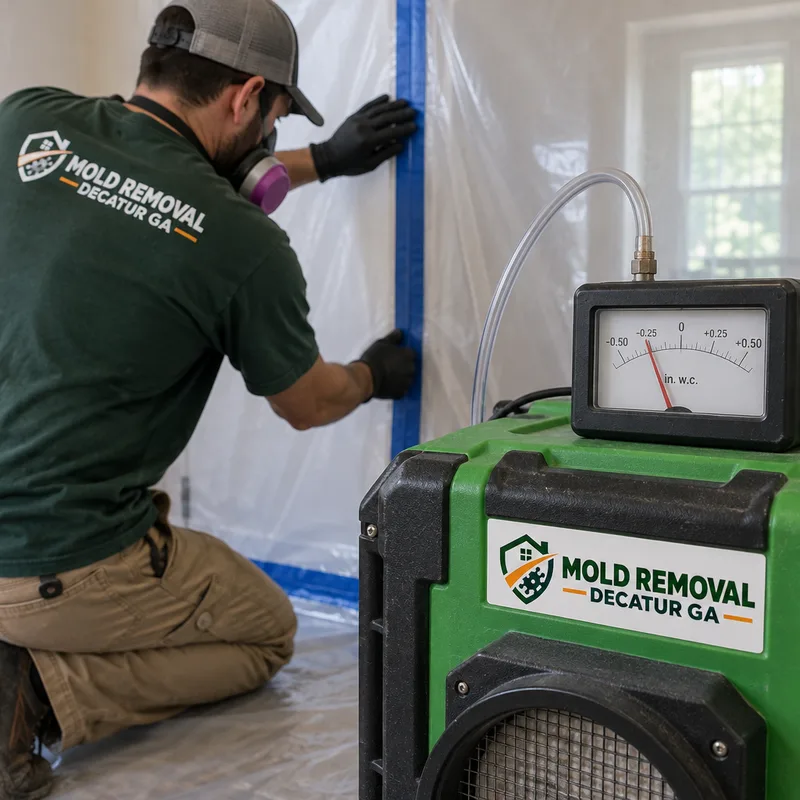
Sealed containment: Poly walls, sealed vents and negative air keep the work zone separate from the rest of the home.
Remove, do not paint: Moldy drywall and ceiling board are cut out and removed. Paint or bleach over growth on paper hides it but does not remove it.
Wrapped disposal: Debris is bagged inside containment, the bags are wiped and wrapped, and they leave through a clean path.
Framing cleanup: Studs and joists behind the removed board are HEPA vacuumed, cleaned and checked for moisture.
Stachybotrys needs water to grow, so the leak, condensation or storm damage behind it has to be fixed before new drywall goes up.
Where it shows up
Slow leaks into the wall or ceiling below a bathroom keep drywall paper wet long enough for dark growth.
Drain and dishwasher line leaks soak cabinet floors and the drywall behind them.
Older roofs and chimney flashing on Decatur bungalows let water into ceiling board over months.
A weeping tank or relief valve leak can wet the base of walls in a closet that rarely gets opened.
Drywall and paneling that were not dried after summer flooding often turn dark within weeks.
Four steps
We measure moisture, find the edges of the damage and check behind the surface before setting the scope.
Containment and negative air go up, and HVAC vents in the zone are sealed.
Affected material is misted, removed, bagged and wrapped, then the framing is cleaned and treated.
Readings confirm the framing is dry, and you get a record of what was removed and what moisture fix is needed.
Related services
Spread or recurring growth handled with negative air, HEPA detailing and a documented closeout.
Growth on joists and subfloor from damp clay and humid vents.
Foundation seepage, finished walls and musty carpet below grade.
Moisture mapping and sampling when the source is hidden.
Leaks, burst pipes and storm water dried before mold sets in.
Roof sheathing growth from poor venting and bath fan exhaust.
Coils, drain pans and ducts that smell musty when the AC runs.
Growth behind tile, under vanities and on ceilings that keeps returning.
Common questions
All indoor mold growth should be removed. Stachybotrys can produce mycotoxins, but the color of mold is not a reliable sign of how harmful it is, so dark growth is handled the same careful way as any significant growth.
Bleach can lighten stains on hard surfaces, but it does not soak into drywall paper or wood, and the water in it can feed regrowth. Porous materials with growth should be removed.
No. The removal method is the same whatever the species. Testing helps only if you need documentation, such as for a landlord or insurance file.
Stachybotrys is slower to start than many molds and usually needs material to stay wet for a week or more, which is why it signals a long-running leak.
For small, well-contained areas most people stay home. If the work is in a main living area, a bedroom, or the person has asthma or a weak immune system, staying elsewhere during removal is the safer choice.
Tell us where the dark spots are and whether there has been a leak. We will measure the moisture, seal the area and lay out what has to come out.