
Red clay that stays wet
Georgia clay drains slowly, so water from gutters and downspouts that empty near the foundation can sit under the house for days.
Serving Decatur, Georgia & surrounding areas
Open 24/7
Crawl space mold in Decatur, Georgia
Growth on joists, subflooring and sill plates cleaned out under containment, with the ground moisture that feeds it put on the plan.
Answer first
Crawl space mold removal clears visible growth from the wood framing under your floor (joists, beams, subfloor and sill plates), cleans the debris out of the space, and leaves you with a written plan for the moisture that caused it. On most jobs the wood is cleaned and treated rather than replaced, because surface growth on sound framing rarely calls for new lumber.
Many Decatur homes built before 1960, especially bungalows in Oakhurst and Winnona Park, sit on vented crawl spaces over red clay. Clay holds water after a storm, summer air is humid, and cool framing under the house collects condensation. That mix is why fuzzy white or dark spotting on joists shows up so often during home sales and HVAC visits.
The air in a crawl space moves up into the living area, which is why musty smells on the first floor often trace back here. If the growth also reaches walls or rooms above, the job grows into whole-house mold removal in Decatur instead of a crawl-only cleanup.
Scope of the work
A crawl space job is planned around tight access, wood framing and ground moisture:
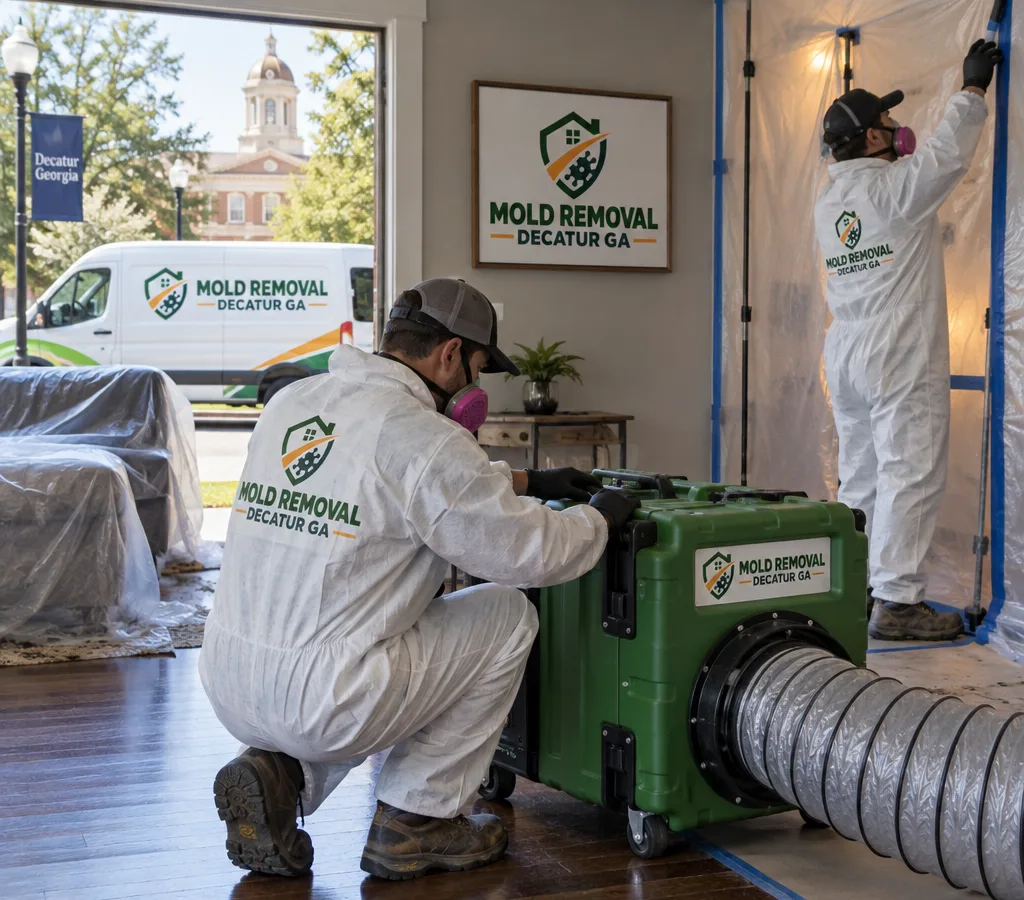
Access and containment: The access hatch or door is sealed and the work area is put under negative air so spores do not get pulled into the home.
Debris and insulation removal: Wet or moldy fiberglass batts, old cardboard, and fallen debris are bagged and taken out.
Wood cleaning: Joists, beams and subfloor are HEPA vacuumed and scrubbed or sanded where growth has rooted into the surface.
Antimicrobial treatment: Cleaned framing is treated to slow regrowth while the moisture plan is put in place.
Vapor barrier review: Torn, missing or short ground cover is noted, since bare soil is a main source of crawl space humidity.
Moisture readings: Wood moisture content is recorded before and after so you can see whether the space is drying.
Encapsulation is a separate decision. Cleaning comes first, and sealing the space only makes sense once the framing is clean and dry.

Decatur crawl space conditions
Georgia clay drains slowly, so water from gutters and downspouts that empty near the foundation can sit under the house for days.
Foundation vents let warm, wet outside air reach cool framing, where it condenses on joists and ducts.
Uninsulated or poorly sealed supply ducts in the crawl space drip condensation onto the subfloor in July and August.
Slow leaks at drain joints and supply lines under kitchens and baths keep one patch of framing damp all year.
Thin or torn plastic from decades ago leaves bare soil releasing moisture into the space.
Four steps
We map where growth is on the framing, take wood moisture readings, and check the vapor barrier, vents, ducts and plumbing.
The access point is sealed and air is exhausted out so disturbed spores stay out of the house.
Debris and bad insulation come out, then joists and subfloor are HEPA vacuumed, scrubbed and treated.
You get readings, photos and a short list of fixes, such as ground cover, duct insulation, drainage or a dehumidifier.
Related services
Spread or recurring growth handled with negative air, HEPA detailing and a documented closeout.
Foundation seepage, finished walls and musty carpet below grade.
Moisture mapping and sampling when the source is hidden.
Dark growth on drywall after a long leak, removed under sealed containment.
Leaks, burst pipes and storm water dried before mold sets in.
Roof sheathing growth from poor venting and bath fan exhaust.
Coils, drain pans and ducts that smell musty when the AC runs.
Growth behind tile, under vanities and on ceilings that keeps returning.
Common questions
Usually, yes. White or gray fuzzy growth on joists is very common in humid crawl spaces, though it can sometimes be efflorescence (mineral salt) on masonry. Salt crumbles into powder, while mold smears and sits on wood. A visual inspection with moisture readings settles it.
Rarely. Surface growth on structurally sound joists is cleaned and treated in place. Replacement is only needed when the wood has rot, feels soft, or has lost strength, which is a moisture-damage problem more than a mold problem.
Yes. Air rises from the crawl space into the living area through gaps around pipes, wires and ducts, so odors and spores from below can be noticed on the first floor.
It depends on how wet the space gets. Many crawl spaces dry out with a full vapor barrier, better drainage and sealed ducts. Full encapsulation with a dehumidifier suits spaces that stay damp after those fixes.
Most crawl space cleanups take one to two days, depending on the size of the space, how much insulation must come out, and how easy it is to move around under the house.
Describe the smell, the stains or what an inspector found under the house. We will check the framing, take readings and lay out the cleanup and moisture fixes.