
Failed grout and caulk
Cracked grout and old caulk around tubs let water reach the backer board behind the tile.
Serving Decatur, Georgia & surrounding areas
Open 24/7
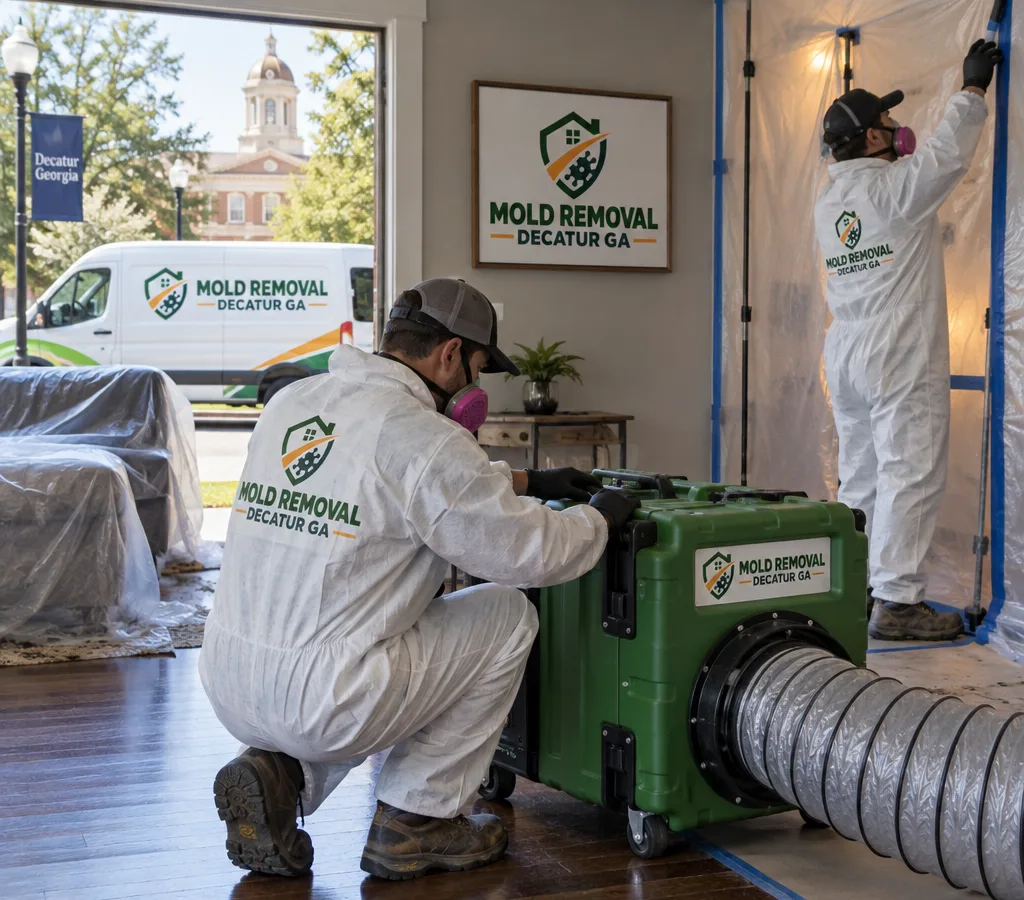
Bathroom mold in Decatur, Georgia
Growth that keeps coming back on grout and caulk, or that has spread behind tile, under the vanity or into the ceiling, removed and traced to its source.
Answer first
Surface mold on grout and caulk can be scrubbed off. Bathroom mold removal is needed when growth keeps returning, when tile is loose or the wall feels soft, when the ceiling stains, or when there is a musty smell under the vanity. Those signs mean water is getting behind the finish, and the moldy material inside the wall or floor has to come out.
In older Decatur homes, bathrooms often have original tile set on plaster or early backer board, cast iron tubs with worn caulk, and small exhaust fans that move little air or vent into the attic. Remodeled baths can have their own problems, such as shower pans or waterproofing that were not installed correctly.
Bathroom growth is often the first visible sign of a larger leak. When moisture has traveled into the room below or nearby walls, the work becomes part of mold removal for the whole house.
Scope of the work
The work follows water from the fixture into the structure:
Moisture readings around fixtures: Walls around the tub and shower, the floor around the toilet, and the vanity base are checked with meters.
Removal behind tile or panels: Where readings or soft spots show damage, tile and backer or drywall are opened to reach growth.
Vanity and subfloor: Cabinet floors and subfloor under leaking sinks and toilets are cleaned or cut out if they are soft.
Ceiling and exhaust fan: Growth on the ceiling is removed and the fan is checked for airflow and where it actually vents.
Leak tracing: Drain, supply and valve connections are checked so the plumbing fix happens before the room is rebuilt.
Mildew on grout that wipes off and does not return is a ventilation habit to fix, not a removal job.
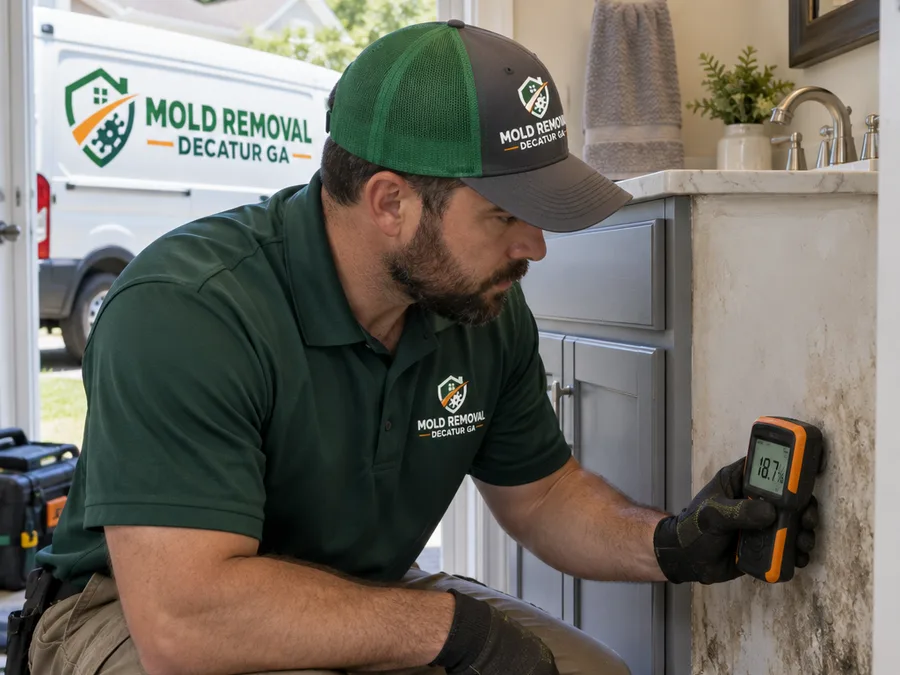
Decatur bathroom conditions
Cracked grout and old caulk around tubs let water reach the backer board behind the tile.
Slow leaks at valve bodies and drain connections wet the wall cavity or the ceiling below.
A worn seal lets water soak into the subfloor around the toilet without showing on the surface.
Undersized fans, or fans ducted into the attic, leave steam in the room and the attic.
Drips from shutoff valves and supply lines soak the cabinet floor and the wall behind it.
Four steps
We check walls, floor, ceiling and the vanity with meters and look for loose tile or soft spots.
The doorway and fan are sealed and the room is put under negative air.
Moldy drywall, backer, subfloor or cabinet floor is removed, then framing is cleaned and treated.
You get the plumbing and ventilation fixes to make before tile and drywall go back in.
Related services
Spread or recurring growth handled with negative air, HEPA detailing and a documented closeout.
Growth on joists and subfloor from damp clay and humid vents.
Foundation seepage, finished walls and musty carpet below grade.
Moisture mapping and sampling when the source is hidden.
Dark growth on drywall after a long leak, removed under sealed containment.
Leaks, burst pipes and storm water dried before mold sets in.
Roof sheathing growth from poor venting and bath fan exhaust.
Coils, drain pans and ducts that smell musty when the AC runs.
Common questions
Grout is porous, so if the bathroom stays humid or water gets behind the tile, growth returns after cleaning. Recurring mold in the same spot often points to a leak or missing waterproofing behind the tile.
Loose or hollow-sounding tile, cracked grout lines, soft drywall next to the shower, peeling paint on the other side of the wall, or a musty smell are common signs. Moisture readings confirm it.
Small spots from steam can be cleaned and fixed with better ventilation. A large or spreading patch, or staining with a soft ceiling, suggests a leak from above or a fan venting into the attic.
Yes. A fan that is too small, clogged or not ducted outside leaves moisture in the room. Running a working fan during the shower and for about 20 minutes after makes a big difference.
Usually not while it is contained and open. Most jobs take a day or two, after which plumbing and tile work can start.
Tell us where the growth keeps returning and whether tile or the ceiling has changed. We will check the moisture and lay out what needs to be opened and fixed.